
From spark to free market: 226 years of energy in the Netherlands
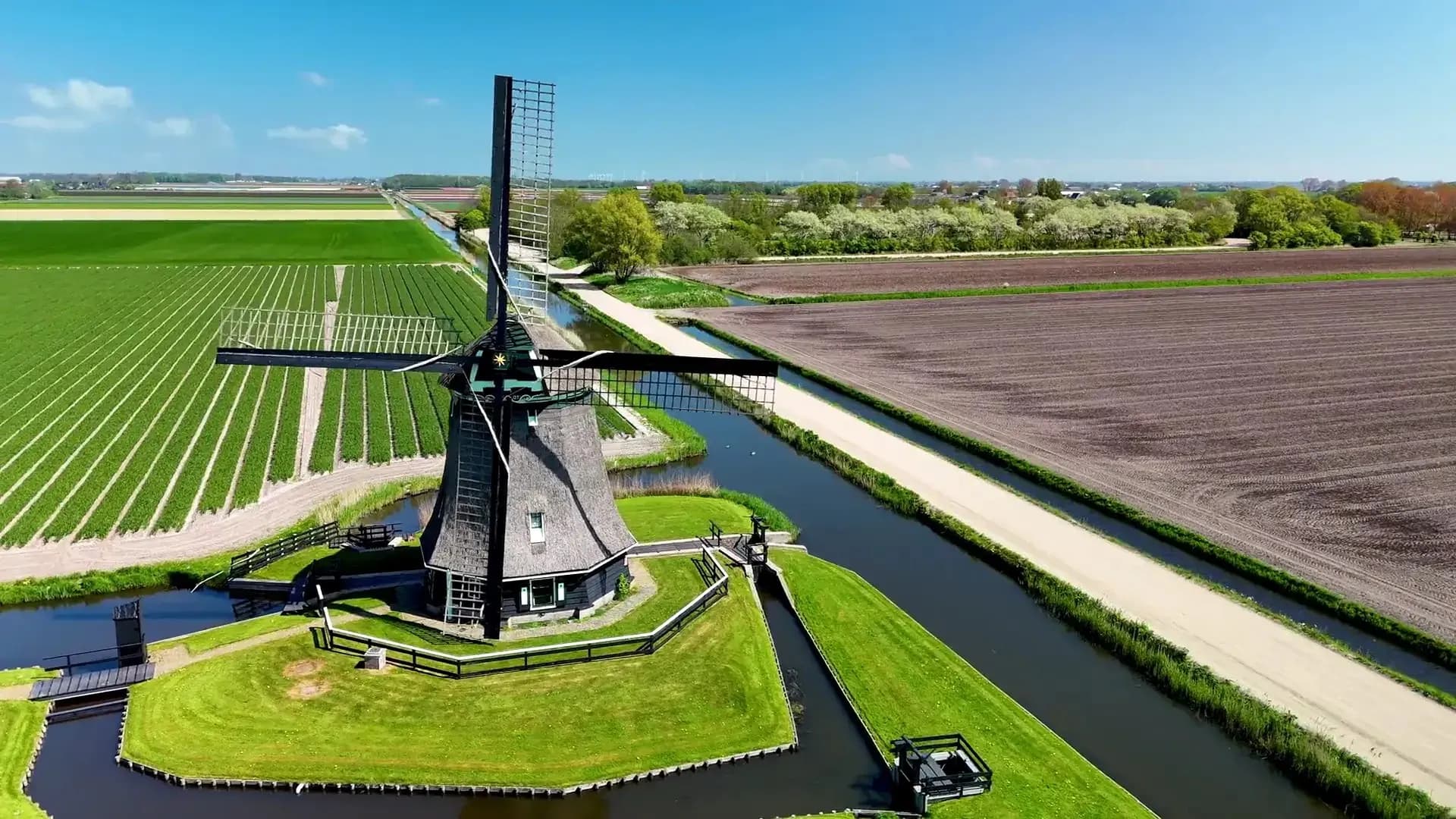
Who holds the energy in the Netherlands? Around 1800 it was the mills and peat: almost half of our energy use came from wind, water and biomass, more than a third from peat. Then came the municipality, the State and the European market. Today, space on the grid decides what a business can do.
Scroll through one continuous landscape, from the windmills of 1800 to today's full power grid. Click a point in the landscape for more information.
Loading landscape…
What 226 years of energy teach us
Energy follows geopolitics. The 1973 oil embargo quadrupled the oil price, and the Netherlands had car-free Sundays. In 2022 gas prices hit record highs in August, and the government introduced a price cap for households.
The market became European. The electricity price is set on a coupled European market. Since 1 October 2025, power for the next day has been traded per quarter hour. Buying energy is now about timing and risk management.
Scarcity shifts. From coal to oil, from oil to gas, and now to space on the grid. On 30 June 2026, 15,498 requests were waiting for grid capacity to take electricity.
What this means for you
The quarter-hour market, grid congestion and the Energy Act (Energiewet) affect your energy purchasing and your risk profile. Since 2010, COMCAM has helped businesses with access to the energy exchanges, a fitting risk profile and the management of their energy portfolio. A Portfolio Manager will think along with you about what this means for your business.
Sources
- CBS (Statistics Netherlands): historical energy timeline (1800-1965) and coal mining timeline; StatLine 80030NED, 84575NED, 82610NED and 00372
- ASME: Cruquius steam pumping station; IEEE (ETHW): Pearl Street Station 1882
- Clingendael International Energy Programme: discovery of the Groningen field 1959; NLOG and NAM: Groningen field
- Parlement.com: car-free Sundays 1973-1974; US State Department: 1973 oil embargo; Dutch House of Representatives: hearing of the parliamentary inquiry into Groningen
- Bulletin of Acts and Decrees 1989, 535 (Electricity Act 1989), 1998, 427 (Electricity Act 1998), 2003, 540 (market opening), 2008, 61 (unbundling) and 2025, 40 (entry into force of the Energy Act)
- TenneT: twenty years of TenneT; Nord Pool and EPEX: launch of CWE market coupling 2010; NEMO Committee: quarter-hour day-ahead trading from 1 October 2025
- European Commission: EU emissions trading since 2005; Regulation (EU) 2022/2578
- Dutch government: Groningen dashboard, end of gas production 1 October 2023, act closing the Groningen field 19 April 2024; Government Gazette 2022, 34154 (price cap)
- Gasunie and Vopak: EemsEnergyTerminal Eemshaven, 2022
- Netbeheer Nederland and the National Grid Congestion Action Programme: waiting lists at 30 June 2026
- World Bank Pink Sheet and ECB exchange rates: TTF annual averages (own calculation)



Does this apply to your business?
Our energy specialists are happy to look at what this means for your connections, your contract and your purchasing situation. Without obligation.