
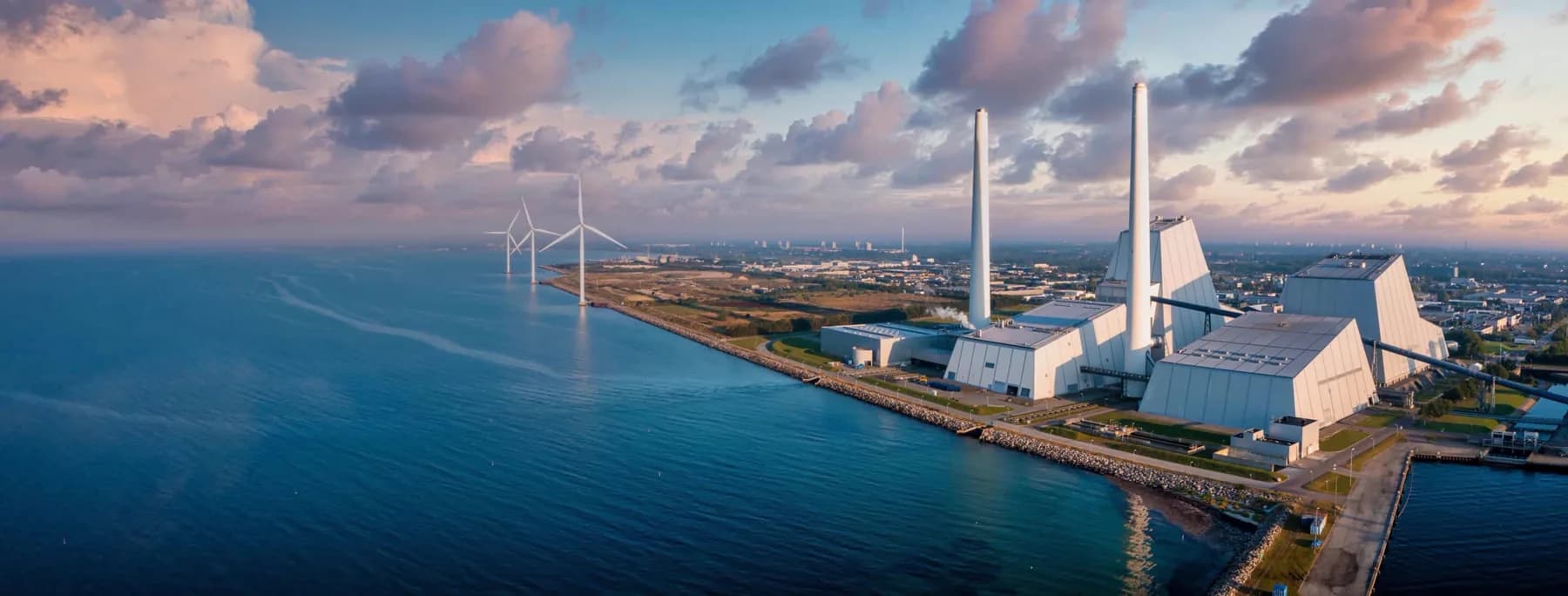
Cable pooling: more wind and solar on one grid connection
On this page
When the wind blows, the sun often doesn’t shine. And vice versa, on a sunny day it usually doesn’t blow. By cleverly combining wind and sun on one connection, you take maximum advantage.
Smartly combining wind and solar on one connection
Wind and solar farms located close to each other can therefore be perfectly connected to one cable or one connection, or cable pooling. The advantages for both the customer(s) and the grid operator are great, because no extra cable is drawn and maximum use is made of the connection. In principle, you can cable pool with different types of generating facilities, but the combination of a wind farm and solar lawn or roof is the most effective. Here the wind farm is leading, because a wind installation usually needs a larger connection capacity than a solar installation.
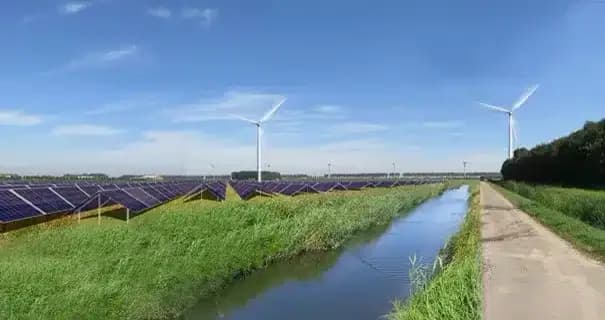
Cable pooling makes it possible to smartly connect a nearby wind and solar farm: the energy sources are then connected to a single grid connection. On average, a wind farm uses thirty percent of the grid connection and a solar farm only ten percent. Between 2 and 4 GW of additional solar generation could potentially be installed by combining solar and wind. There are huge opportunities here to make optimal use of energy from solar and wind. This way the capacity of the power line is better utilized and the energy supply becomes more stable.
Application
Combining solar and wind on a single connection in areas with transport scarcity or long connection waiting times.
Value
- The grid operator needs to build less infrastructure
- Developers save on standing charges and connection costs
- Developers can connect more generation capacity, faster
Stakeholders
Developers, grid operator, regulator and banks (financing).
Cable pooling combined with large customer
The technique of cable pooling can also be used to smartly connect a new wind or solar farm to, say, a large consumer of electricity, such as a data center, factory or business park.
Cable pooling is interesting for the following reasons:
- With it, you avoid having to build a new or larger connection. This is because wind and sun usually alternate. When the wind is strong, there is usually little sun and vice versa. Only a small part of the time is there both a lot of sun and wind. Only then, when combining a solar and wind installation, is it necessary to limit power generation, because otherwise the grid connection is too small for the amount of electricity.
- It reduces congestion on the medium-voltage grid, thus enabling more generation projects. By cable pooling, you use the existing infrastructure more effectively. It is expected that some three to four gigawatts of additional capacity can be connected to the existing power grid in this way.
- In areas of scarcity, cable pooling allows additional solar to be added to existing wind generation facilities. There is then no need to wait for an increase in infrastructure. On this capacity map you can see where there are bottlenecks in the Dutch electricity network.
- It provides a more stable energy supply. Because solar and wind alternate, the generation profile is more balanced on an annual basis.
- Both developers and grid operators save investment if no additional transfer stations and cables need to be installed
Cable pooling variants
Several cable pool variants are possible, depending on the situation and the number of people involved:
- A rechtsperson combines solar and wind on its own connection
- Several legal entities on one connection (MLOEA)
- A closed distribution system by infrapooling (GDS)
1. A legal entity combines solar and wind on its own connection
2. Different legal entities on one connection (MLOEA).
3. A closed distribution system by infrapooling (GDS).
Figures: own rendering, after Netbeheer Nederland



Does this apply to your business?
Our energy specialists are happy to look at what this means for your connections, your contract and your purchasing situation. Without obligation.