
Asia begins to price U.S. oil against Brent as volatility peaks in Dubai
Source : Michael Kern of OilPrice.com
Asian refiners have begun pricing their orders for U.S. crude at the ICE Brent benchmark instead of the usual Dubai crude price, as the Middle East benchmark fluctuates wildly due to limited physical supplies from the Persian Gulf.
Dubai crude oil prices rose to a record high of $169.75 per barrel last week and were at about $130 per barrel.
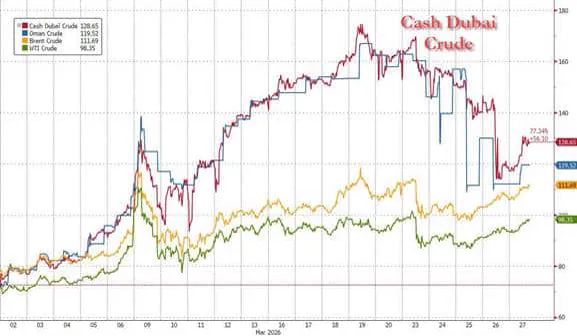
These highly volatile prices and supply uncertainty from the Middle East have prompted refiners in Asia to price their products against Brent , rather than the Dubai benchmark that traditionally prices imports in the world’s largest crude oil import region.
A number of Japanese refiners have already purchased U.S. crude cargoes for delivery in July, priced at ICE Brent, sources at trading and refining companies told Reuters . Taiyo Oil, for example, bought 2 million barrels of U.S. light crude through a tender at a $19 per barrel premium to ICE Brent for delivery in July, according to Reuters sources. Taiyo Oil usually buys U.S. West Texas Intermediate crude, priced at the Dubai benchmark.
The major shift in Asian pricing shows the market’s unwillingness to trade Dubai prices. These prices have been seriously distorted in recent weeks by the major physical supply disruptions with the de facto closure of the Strait of Hormuz.
Asian refiners are also being forced to pay huge premiums for non-Middle Eastern crude, especially for the sour grade, suitable for Asian refineries focused on processing sulfur-rich, Persian Gulf crude. The most suitable grade from Norway, Johan Sverdrup, was offered last week at record high double digits over Dated Brent.
Refineries in Asia are also reducing processing rates because of a crude oil shortage. As a result, fuel prices continue to rise and governments are introducing fuel-saving measures such as four-day work weeks, working from home and extended national holidays. Many Asian countries are also banning fuel exports. This is affecting global fuel supplies, especially in the jet and diesel markets.