
Physical shipping data still tells a different story than the diplomacy
This week again showed how far diplomatic signaling can drift from what is actually moving through the Strait of Hormuz. Qatar's foreign ministry said draft language for a settlement between Washington and Tehran was circulating among the parties, and Treasury Secretary Scott Bessent told CNBC a deal to reopen the strait was possible "today or tomorrow." Reporting from the same week also recorded President Trump using markedly more threatening language toward Iran, and Iranian officials publicly describing a settlement that would leave Tehran, not international shippers, in effective control of vessel movement through the strait. Those two positions are not close to converging.
Set against that noise, tanker flows through the strait have moved up only gradually. Ship tracking data compiled by Bloomberg shows commercial cargo vessel crossings climbing off their June lows but still running well below the peak seen in late June, with clearance levels described as close to recent lows even during pauses in direct strikes. Brent crude fell below $80 a barrel for the first time since mid July before steadying in a range in the high $70s to low $80s by 5 August, a reminder that headline relief rallies have so far been shallower and shorter lived than the diplomatic language behind them would suggest.
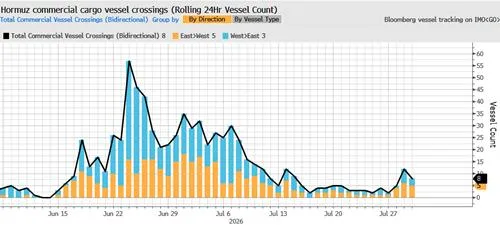
Commercial cargo vessel crossings through the Strait of Hormuz, rolling 24 hour count. Source: Bloomberg vessel tracking data.
The practical takeaway for energy buyers is not which headline to believe this week, but how much of this volatility is already translated into products and contracts they actually use. That distinction, between crude oil prices and the tighter products market sitting behind them, is where this edition's crude oil section picks up.