IEA: 6 months before Gulf energy supplies recover after biggest ever energy shock
The head of the International Energy Agency told the Financial Times on Friday that the world is seriously underestimating the scale of the energy crisis in the Gulf region and that it could take at least six months to restore disrupted oil and gas flows.
Fatih Birol described the conflict, which has been going on for three weeks now , as “the greatest global energy security threat in history “and said it would take time “to have oil and gas rehabilitated.”
“It will be six months for some [sites] to be operational, others much longer,” Birol warns.
Attacks on energy installations in the Middle East continued last week. Israel unleashed a veritable conflagration by attacking Iran’s South Pars gas plant , leading Iranian forces to launch attacks on LNG facilities in Qatar. It could take three to five years for these plants to return to full capacity.
Both attacks indicated that upstream energy sources are no longer taboo , although Israel has since promised not to attack Iranian energy sources.
Struyven, commodities expert at Goldman Sachs, said his oil team’s near-term view remains as follows:
1) Oil prices are expected to continue rising as long as transit through the Strait of Hormuz will remain very low.
2) Brent oil prices are likely to surpass 2008 record levels as low supply keeps the market focused on the risk of prolonged disruptions, and
3) Any increase in the market’s perceived risk of U.S. export restrictions is likely to further widen price differentials between Brent and WTI .
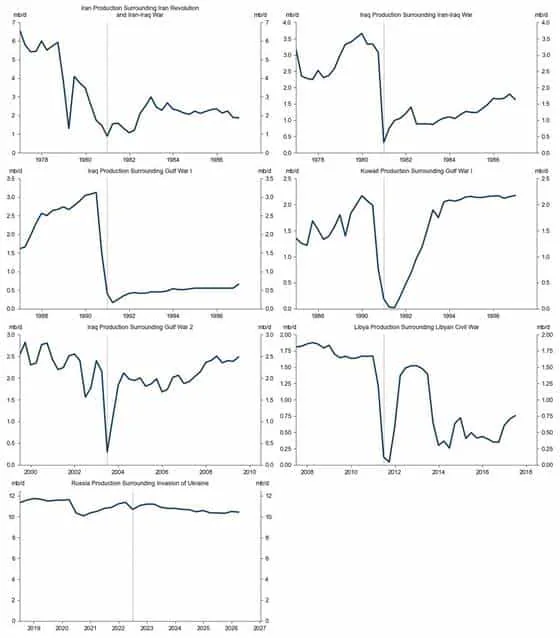
Five of the seven largest historical oil supply shocks of the past 50 years were of a sustained nature.
The regions currently hardest hit by the energy shock are in Asia because of their high dependence on imported energy from the Gulf states.
“The countries that are exposed to that supply disruption are not so much in Europe, or in the Americas, they’re actually really in the Asia region ,” Michael Williamson of the United Nations Economic and Social Commission for Asia and the Pacific told AP News.
And now we have three oil markets: Asia (Oman oil at $167), Brent ($113) and the US (WTI $97).
According to Ramnath Iyer of the U.S. Institute for Energy Economics and Financial Analysis, Asia must prepare for “cascading impacts into all economic activities.”